The problem: strong brand, weak non-branded visibility
Malaysian parents researching international or private schools rarely start by searching a school's name. They search things like "international school Kota Damansara" or "best private school for my child near me," comparing several options before a brand ever enters the picture. Sri KDU had the reputation to win that comparison. What they did not have was the visibility to be part of it.
The audit surfaced three specific issues:
- Low visibility for non-branded keywords. The site ranked reasonably well for its own name, which does nothing for a parent who has never heard of it yet.
- Fragmented content structure. Information about programmes, campuses and admissions was spread thin across the site with no clear structure tying it together, which makes it hard for both parents and Google to find the page that actually answers a given question.
- Limited local SEO presence. With three separate campuses, a single generic sitewide identity was not enough. Each location needed to be found by parents searching specifically near it.
Left as is, this meant Sri KDU kept losing new-to-brand families to whichever competitor showed up first for the generic searches, while spending more on paid search every year just to stay visible for the exact terms organic search should have been winning for free.
Why this mattered more than usual: search is splitting into AI answers
Education is a research-heavy category. Parents do not make one search and decide, they ask a string of comparison and follow-up questions over days or weeks, which is exactly the kind of query behaviour Google's AI Overviews and People Also Ask panels are built around. A school that is not structured to answer those questions directly does not just rank lower, it can be skipped entirely while an AI-generated summary answers the parent's question using a competitor's content instead.
That made this campaign a genuine test of working across classic SEO and GEO at the same time, not as two separate projects but as one strategy aimed at the same parents at every stage of their research.
What we did
The strategy had to solve three different problems for three different campuses at once, so the work broke down into three parts.
Targeted visibility for non-branded search
We built out content and technical signals specifically aimed at the high-intent, non-branded searches parents actually use, and structured key pages so they could be pulled directly into AI Overviews and People Also Ask panels, not just the classic results list.
Local SEO for every campus, not just the brand
Kota Damansara, Subang Jaya and Klang each got their own local SEO treatment, since a parent searching near one campus needs to find that campus specifically, not a generic page about the school group as a whole.
Content restructure and conversion-focused pages
We consolidated the fragmented content into a clear structure mapped to how parents actually research a school, and optimised the site to turn that traffic into scheduled campus tours and enrolment enquiries rather than just passive visits.
The results
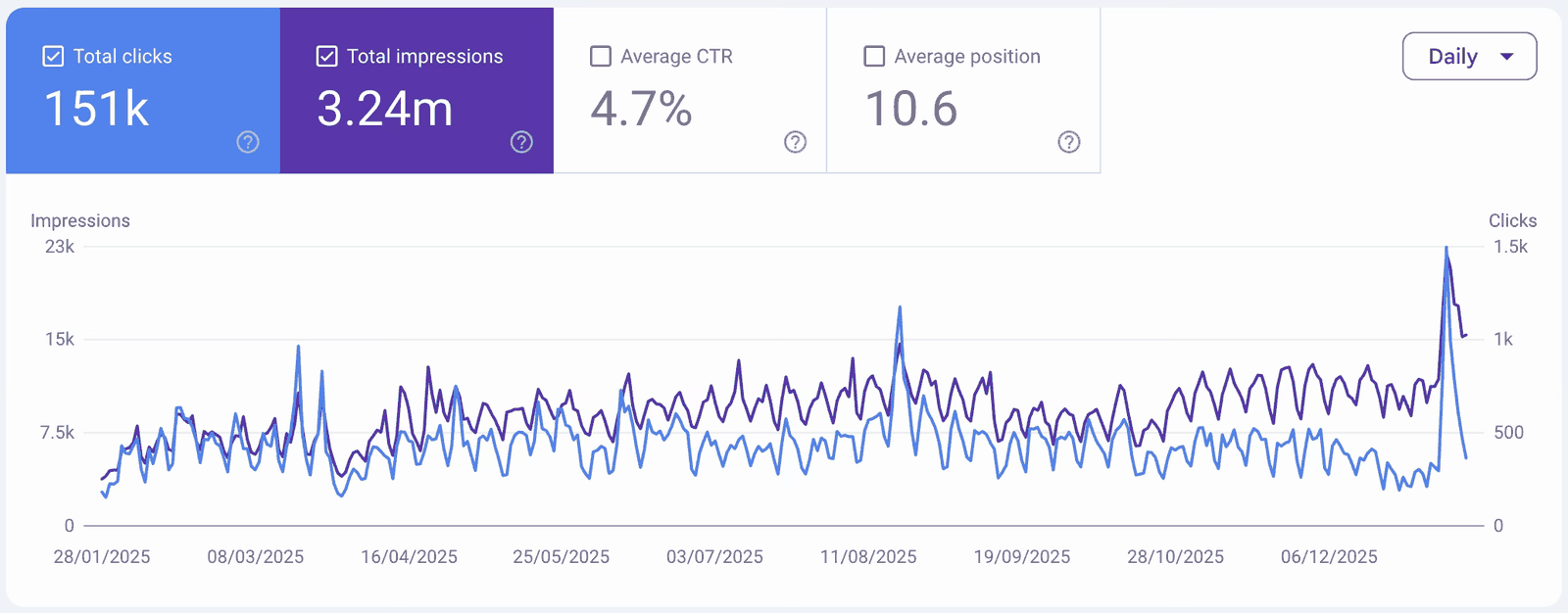
Actual Google Search Console data: 151K total clicks, 3.24M total impressions, 4.7% average CTR, 10.6 average position.
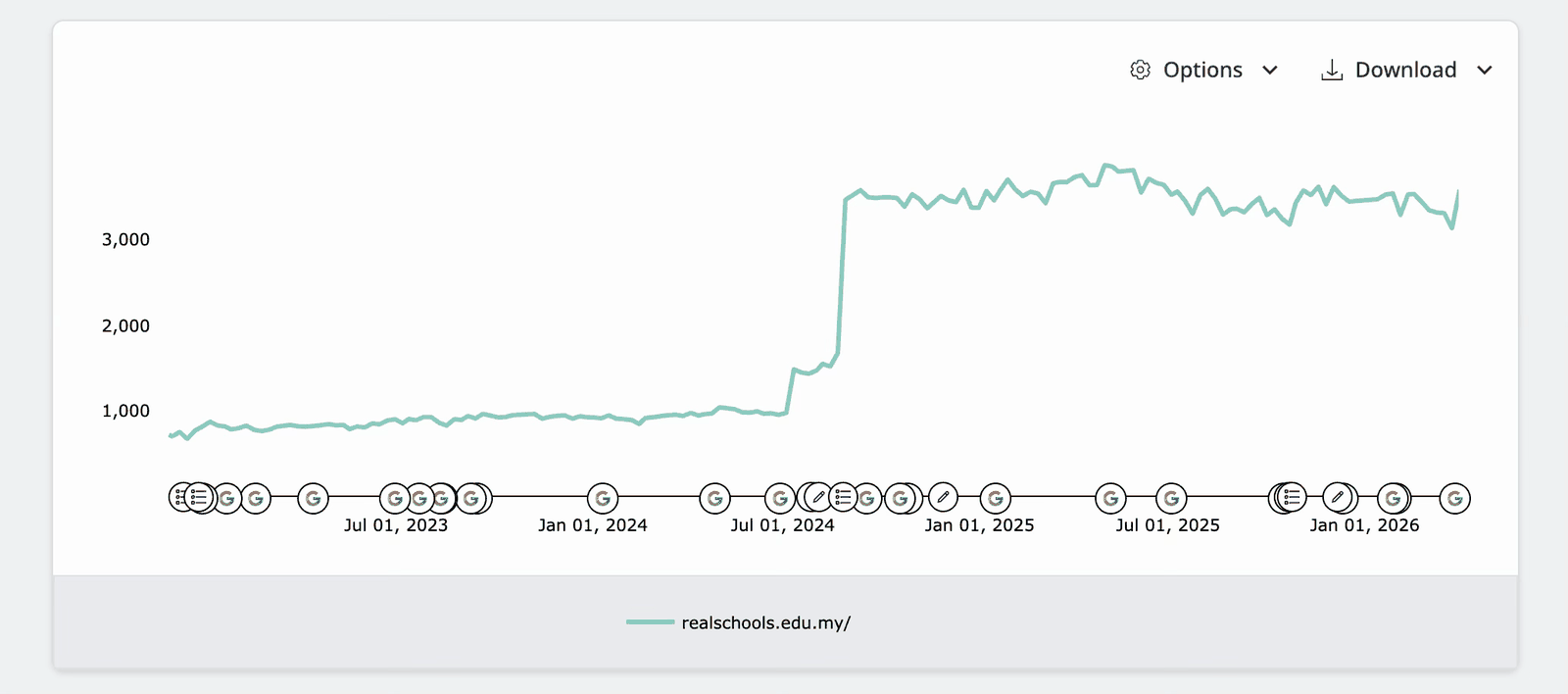
Visibility score climbing from a flat baseline of under 1,000 to a sustained 3.6K, up 2.9K over the campaign.
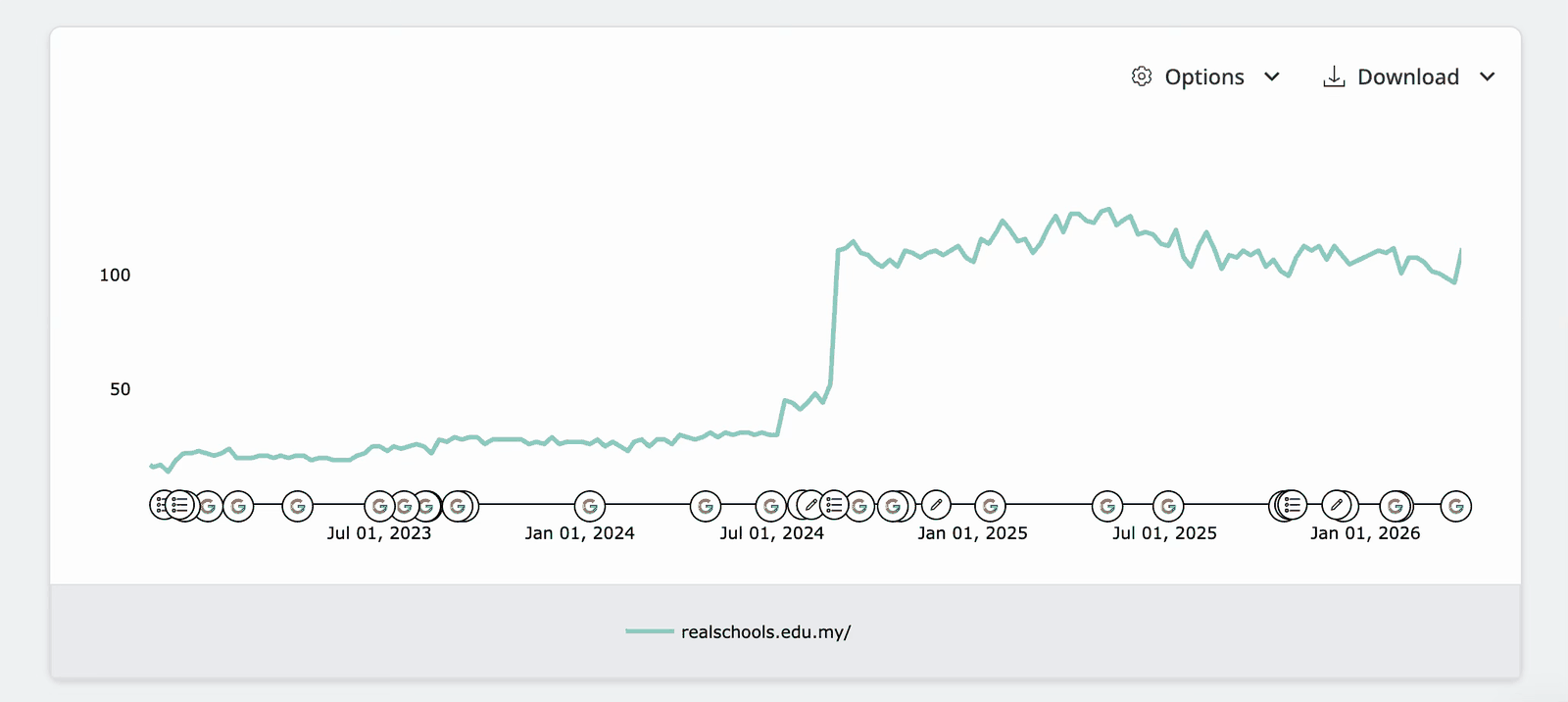
Keywords ranking in Google's top 10 results climbing from roughly 10-40 to a sustained 111, up 94 over the campaign.
The pattern across all three metrics is the same: a long flat period followed by a sharp, sustained step up, not a temporary spike. Once the content structure and local SEO foundations were in place, both classic rankings and AI-surface visibility moved together and held their new level.